
Walking through the old town
From the Markt, the route crosses Burg square to the old fish market, then follows the water towards the Church of Our Lady. Beyond the Beguinage lies Minnewater, already close to the station.
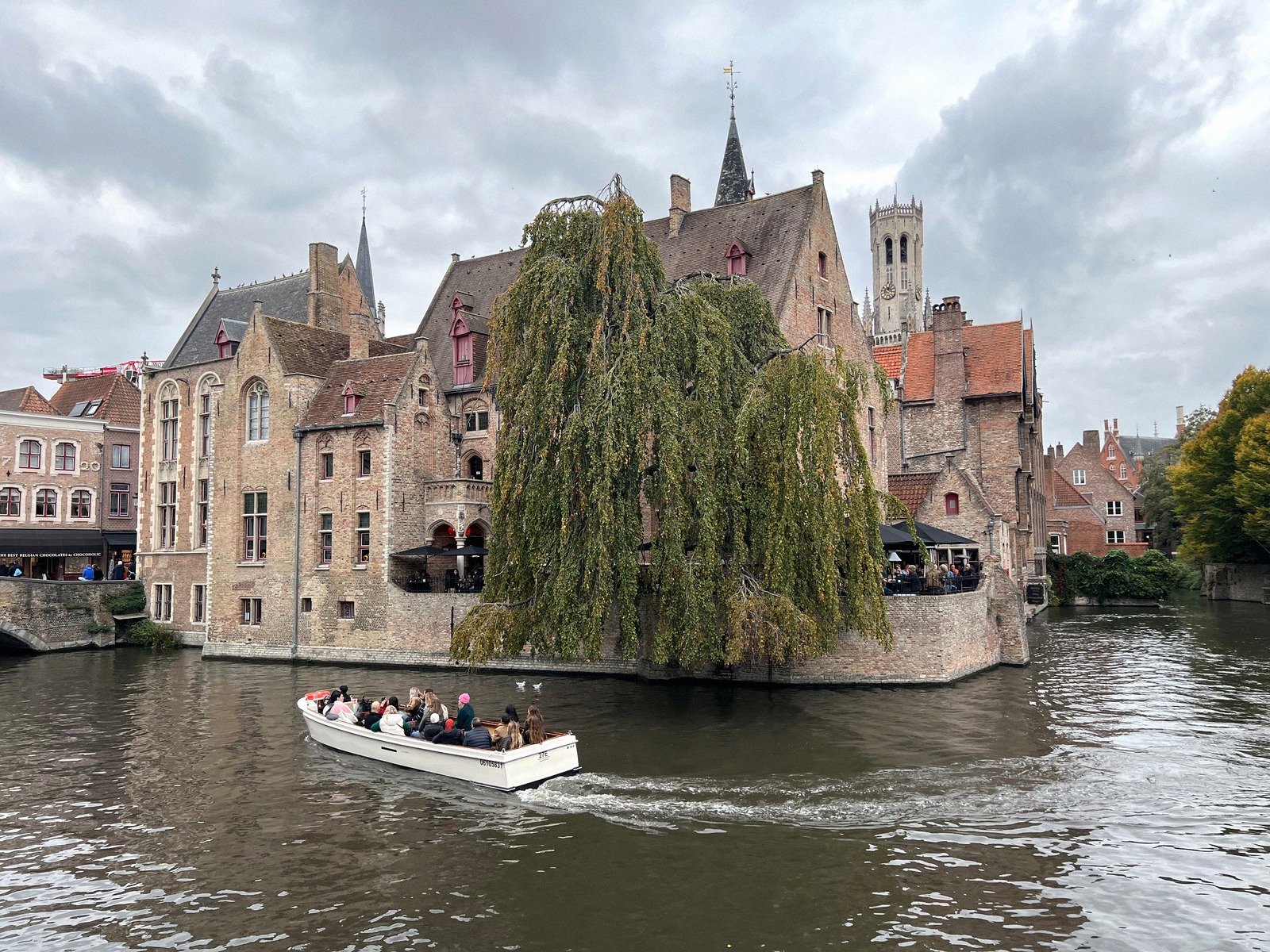
Stops between the Markt and Minnewater
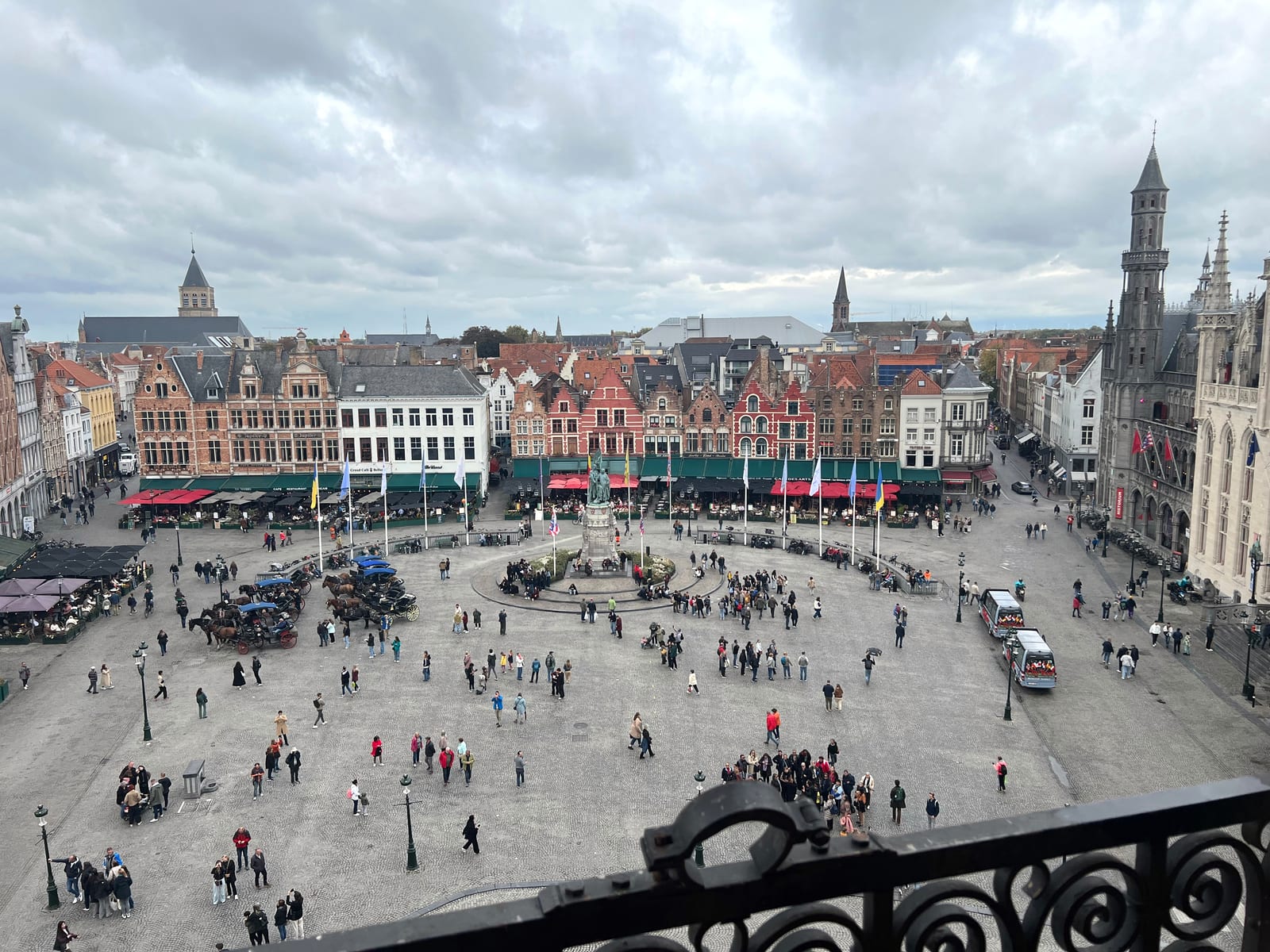
Markt
The Belfry and Provincial Court stand diagonally opposite each other on the central market square. On Wednesdays, traders set up their stalls among the gabled houses.
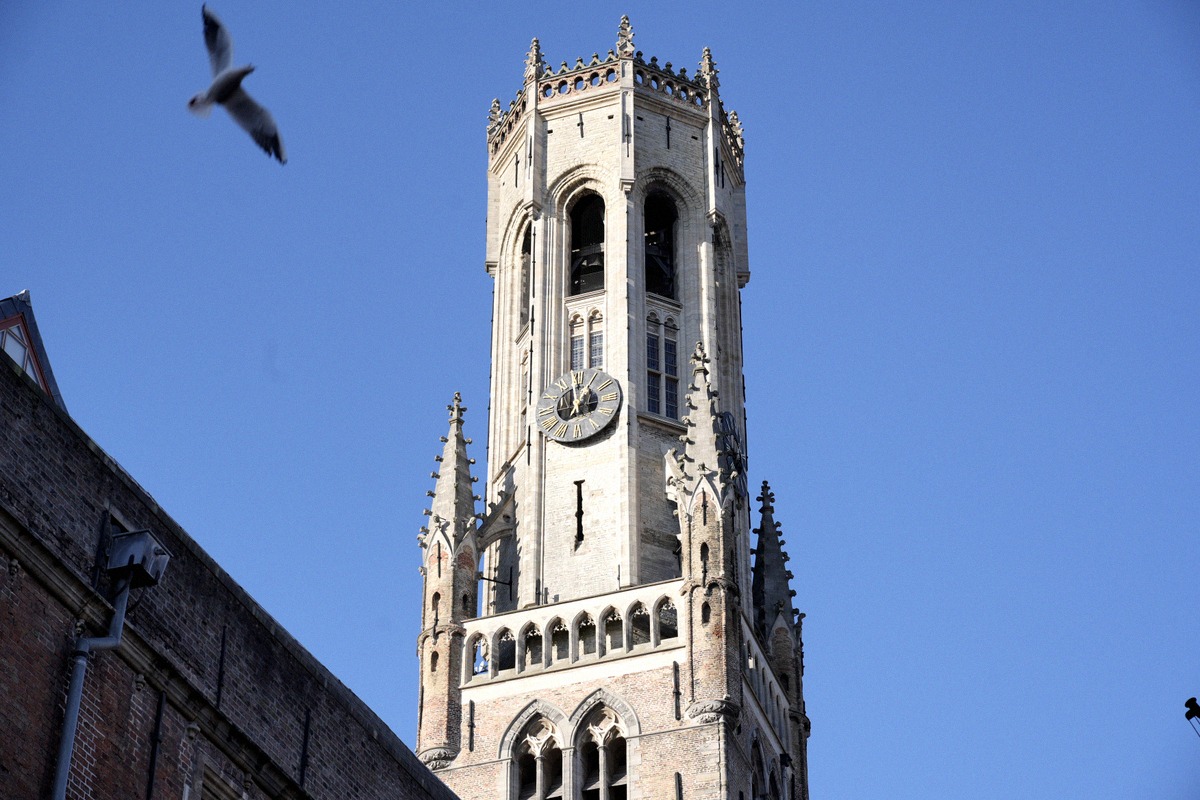
Belfry
The Belfry rises 83 metres above the old market halls. The staircase to the viewpoint takes you through the treasury and past the carillon.
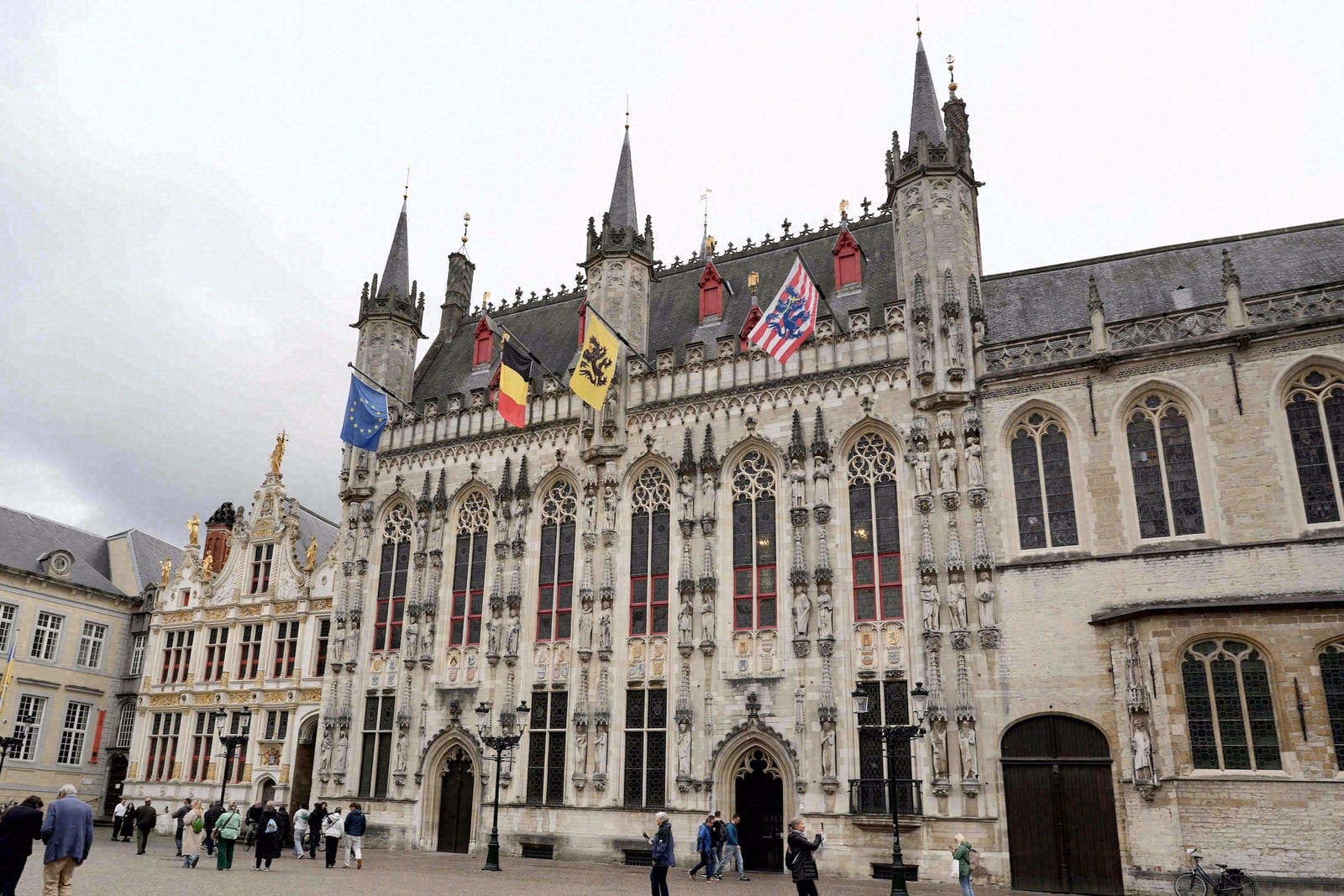
Bruges City Hall
The Gothic City Hall on the Burg remains the home of local government. Murals in its great hall tell the story of Bruges, while its vaulting showcases medieval craftsmanship.
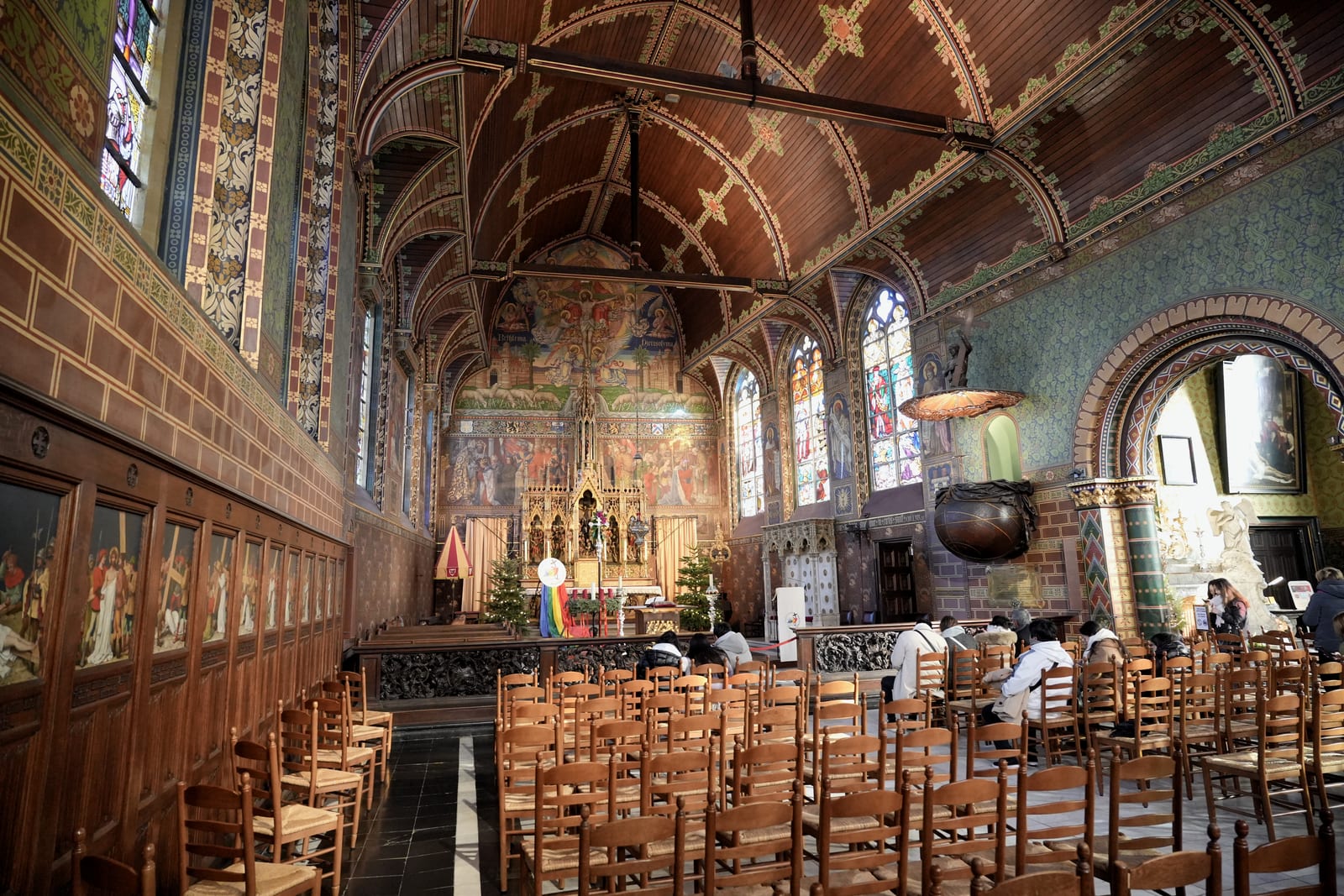
Basilica of the Holy Blood
Two very different chapels stand one above the other on the Burg: a Romanesque room of dark stone below and a colourfully decorated chapel housing the venerated Holy Blood relic above.
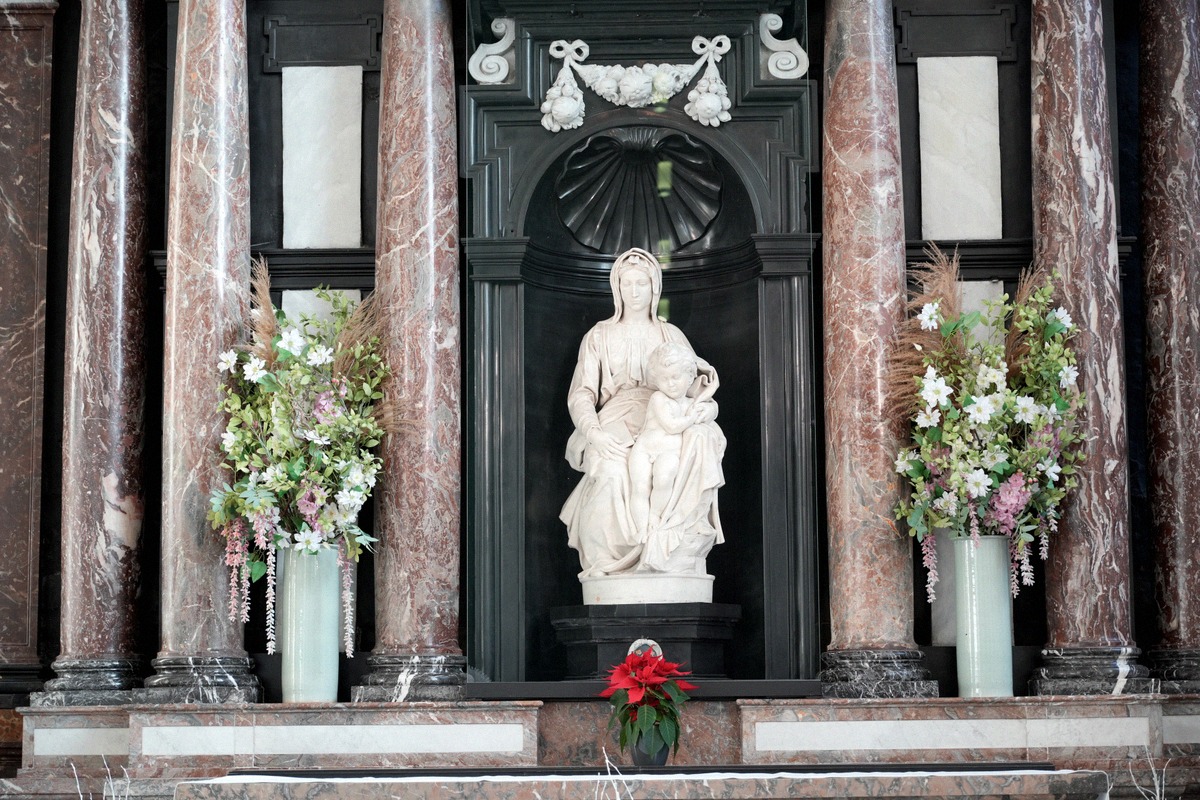
Church of Our Lady
The Church of Our Lady houses Michelangelo’s Madonna and Child. Its museum also includes the high choir, with the tombs of Mary of Burgundy and her father.
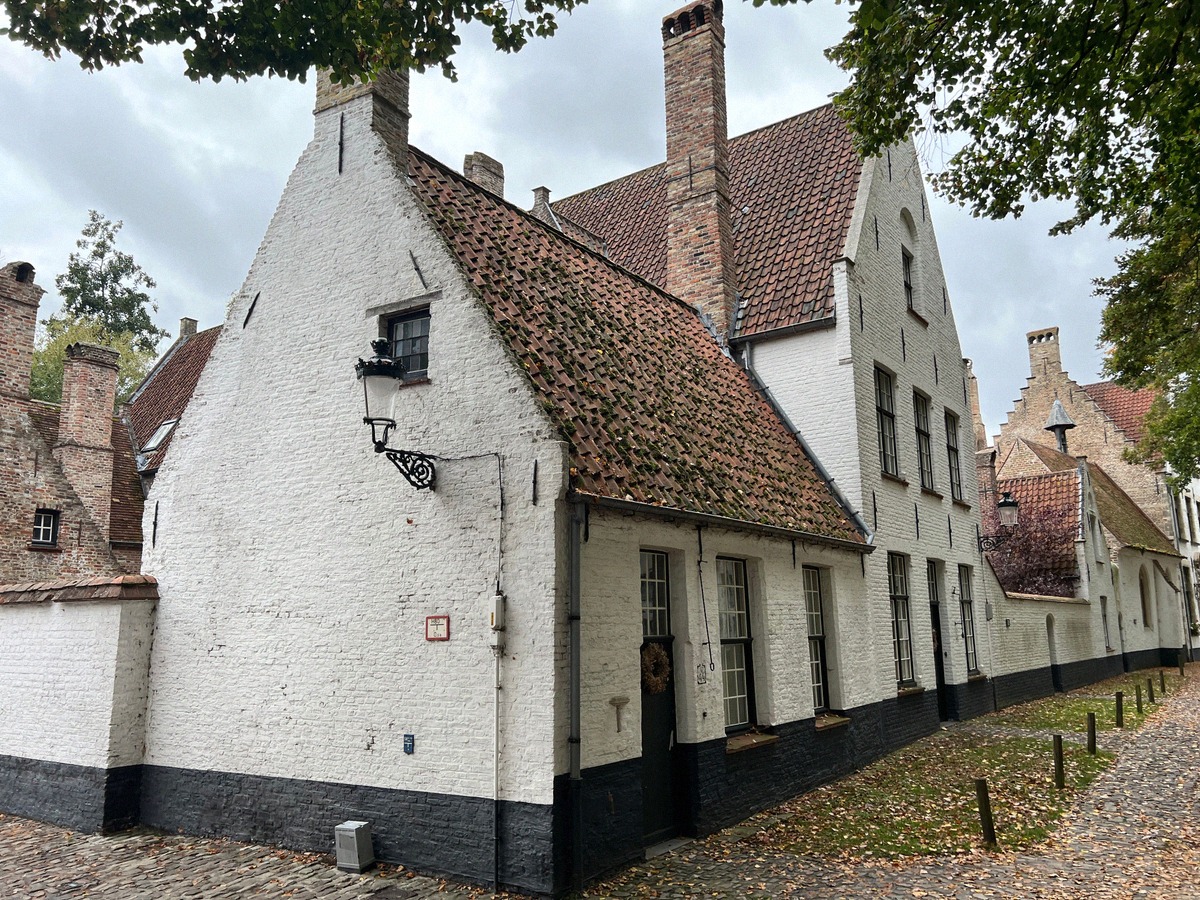
Beguinage
Beside Minnewater, whitewashed houses surround the garden of Ten Wijngaerde Beguinage, founded in 1245 for a community of religious women.
Map of the sights
All places on the map as a list (23)
Sights
Churches
The walking route
From the Markt via Burg square to the fish market
On the Markt, stepping back from the halls towards the middle of the square reveals the full height of the Belfry. The gateway at its foot leads into a courtyard. From here, the climb to the viewing platform involves 366 steps, with the descent by the same staircase.
Short Breidelstraat links the Markt with Burg square. On the south side, the Gothic City Hall stands out with tall windows and turrets. The Basilica of the Holy Blood is set back in the corner to its right. Beside City Hall, Blinde-Ezelstraat crosses a bridge to the Vismarkt, the old fish market. A few steps through Huidenvettersplein lead to Rozenhoedkaai.
A boat trip at Rozenhoedkaai or a walk along the Dijver
At Rozenhoedkaai the Belfry comes into view again, this time behind the waterside houses. A canal trip makes a break from walking. The open boats follow a circuit of about half an hour and return to the same landing stage, leaving the route along the Dijver to continue on foot.
The Groeningemuseum and Gruuthuse Palace stand along the Dijver, with the brick tower of the Church of Our Lady rising behind them. A longer stop might take in Michelangelo’s Madonna inside the church or Memling’s paintings at Museum St John’s Hospital opposite.
Via Walplein to Minnewater
Beyond the hospital, the route crosses Walplein, home to De Halve Maan brewery, and continues to Wijngaardplein. A bridge over the water gives access to Ten Wijngaerde Beguinage. White houses surround a lawn with tall trees. This is a residential courtyard, where visitors stay on the paths and keep their voices low.
Back on Wijngaardplein, the route heads south towards Minnewater. The bridge opens up a view along the lake. For a return journey by train, Brugge station is nearby. A loop back to the Markt instead heads west via ’t Zand, the Concertgebouw and St Saviour’s Cathedral.
A northern route through the Sint-Anna district
A second walk explores the neighbourhoods north and east of the Markt. The Provincial Court stands on the square’s eastern side. Vlamingstraat, home to the Frietmuseum, leads towards Jan van Eyckplein and the canals of the former trading quarter. St James’s Church forms a separate detour west of the Markt.
East of the water, residential streets and smaller churches define the Sint-Anna district. St Walburga’s Church has a Baroque interior. At St Anne’s Church, Hendrik Herregouts’ Last Judgement fills an entire wall. The nearby Jerusalem Chapel was built as the Adornes family’s private church. On Balstraat, the Museum of Folk Life recreates shops, workshops and living rooms from everyday life in earlier Bruges.
For a longer loop north, the Museum of Our Lady of the Pottery stands on Potterierei. Its church and former hospital foundation bring religious art together with the history of care for the sick. This detour can also be treated as a separate museum visit rather than part of the shorter old-town walk.
Why the historic centre is a World Heritage Site
The historic centre of Bruges has been a UNESCO World Heritage Site since 2000. Its surviving heritage includes more than individual Gothic buildings: the medieval pattern of streets, squares, canals and open spaces remains. Routes towards the major squares and the waterways still reveal the layout of the trading city. Grand merchants’ houses, smaller homes, churches and former hospitals stand within a centre that remains a place to live.
The canals once carried goods through the city. A boat trip shows the rows of houses from the water, while walking leads through the squares and lanes between them. The two complement each other, though a cruise does not replace visits inside churches or museums. The guides to food and drink and shopping offer places to pause and other routes through town.