
Basilica of the Holy Blood
Two very different chapels stand one above the other on the Burg: a Romanesque room of dark stone below and a colourfully decorated chapel housing the venerated Holy Blood relic above.
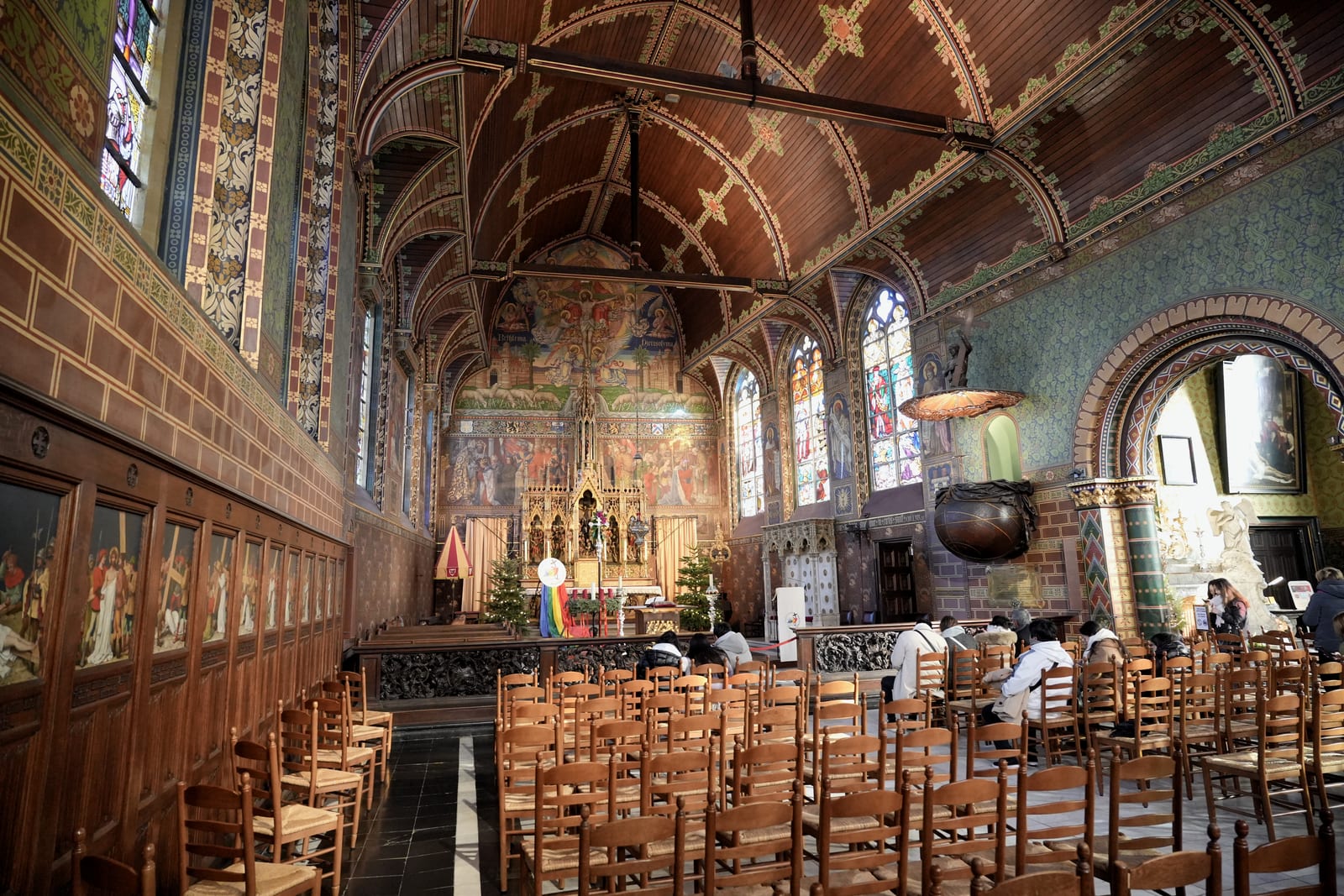
Two chapels on the Burg
The lower chapel is dedicated to St Basil. Built in the 12th century as the count’s chapel, it retains a Romanesque interior with heavy pillars and round arches. The dark stone makes a particularly strong impression after the bright open square of the Burg.
An ornate staircase leads to the upper chapel. This too was originally Romanesque, but was later remodelled in the Gothic style. Its colourful decoration today owes much to the 19th century. Stained glass and wall paintings depict rulers, saints and the veneration of the relic. The two interiors offer very different responses to the same religious purpose.
The relic and the treasury
The Holy Blood relic is kept in the upper chapel. According to tradition, crusaders brought it to Bruges. This religious belief forms part of its veneration. The treasury displays associated artworks and precious reliquaries. It is a separate museum area.
The Ascension Day procession
The Procession of the Holy Blood carries the relic through the city each year on Ascension Day. Its roots reach back to the Middle Ages. Groups in historical costume recall biblical events and Bruges’ Burgundian heyday. Outside the festival, the basilica remains a place of worship. City Hall stands directly beside it. Together, the two buildings reveal the former secular and religious importance of the Burg.