
Churches in Bruges
If you visit just one church, the Church of Our Lady holds Michelangelo’s Madonna and the Burgundian tombs. The Basilica of the Holy Blood brings together two very different chapels. For a quieter walk through a residential neighbourhood, the Jerusalem Chapel and St Anne’s Church stand close together.
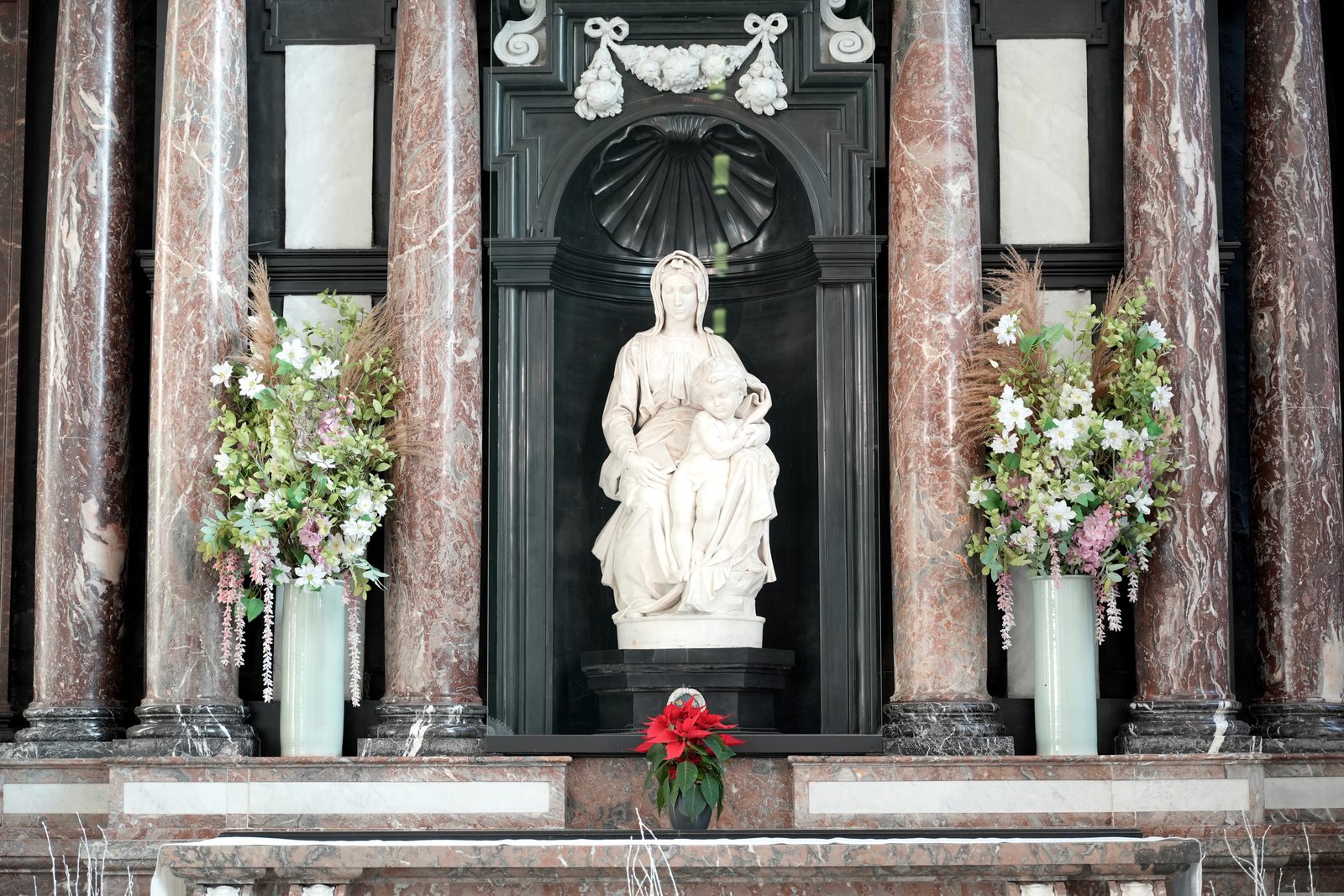
Churches and chapels
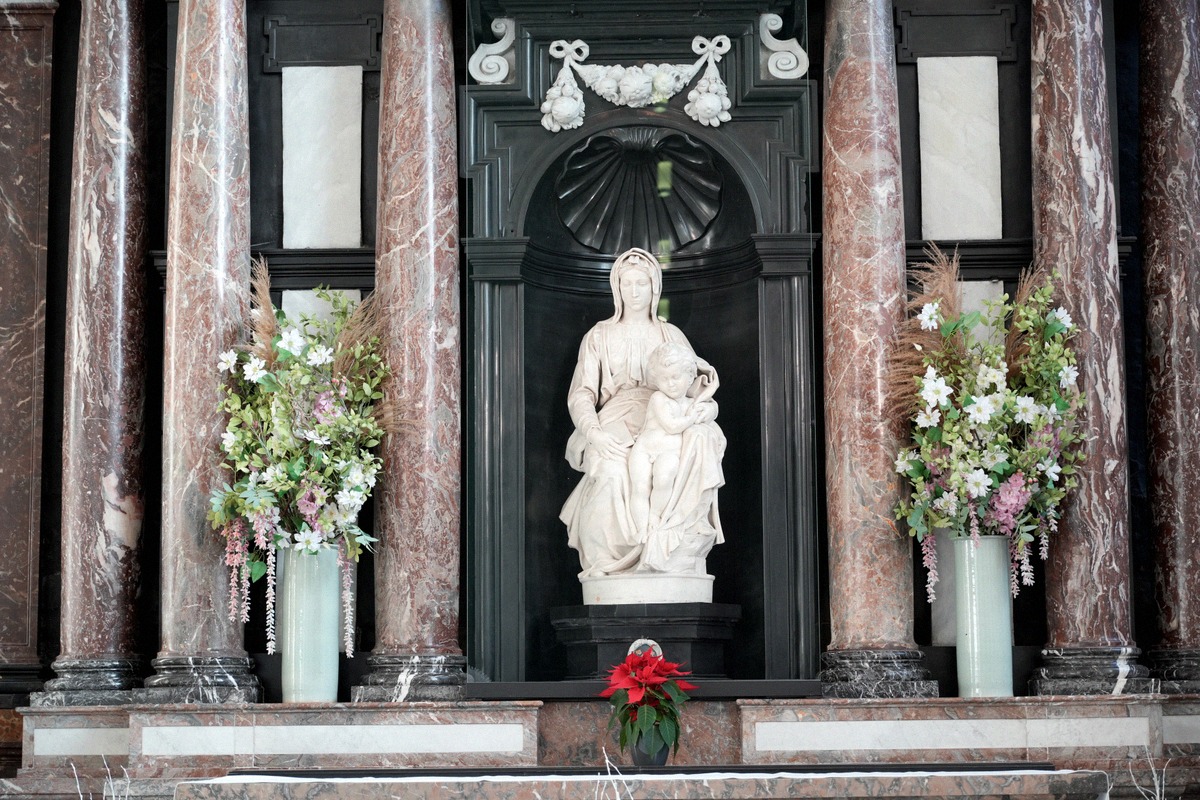
Church of Our Lady
The Church of Our Lady houses Michelangelo’s Madonna and Child. Its museum also includes the high choir, with the tombs of Mary of Burgundy and her father.
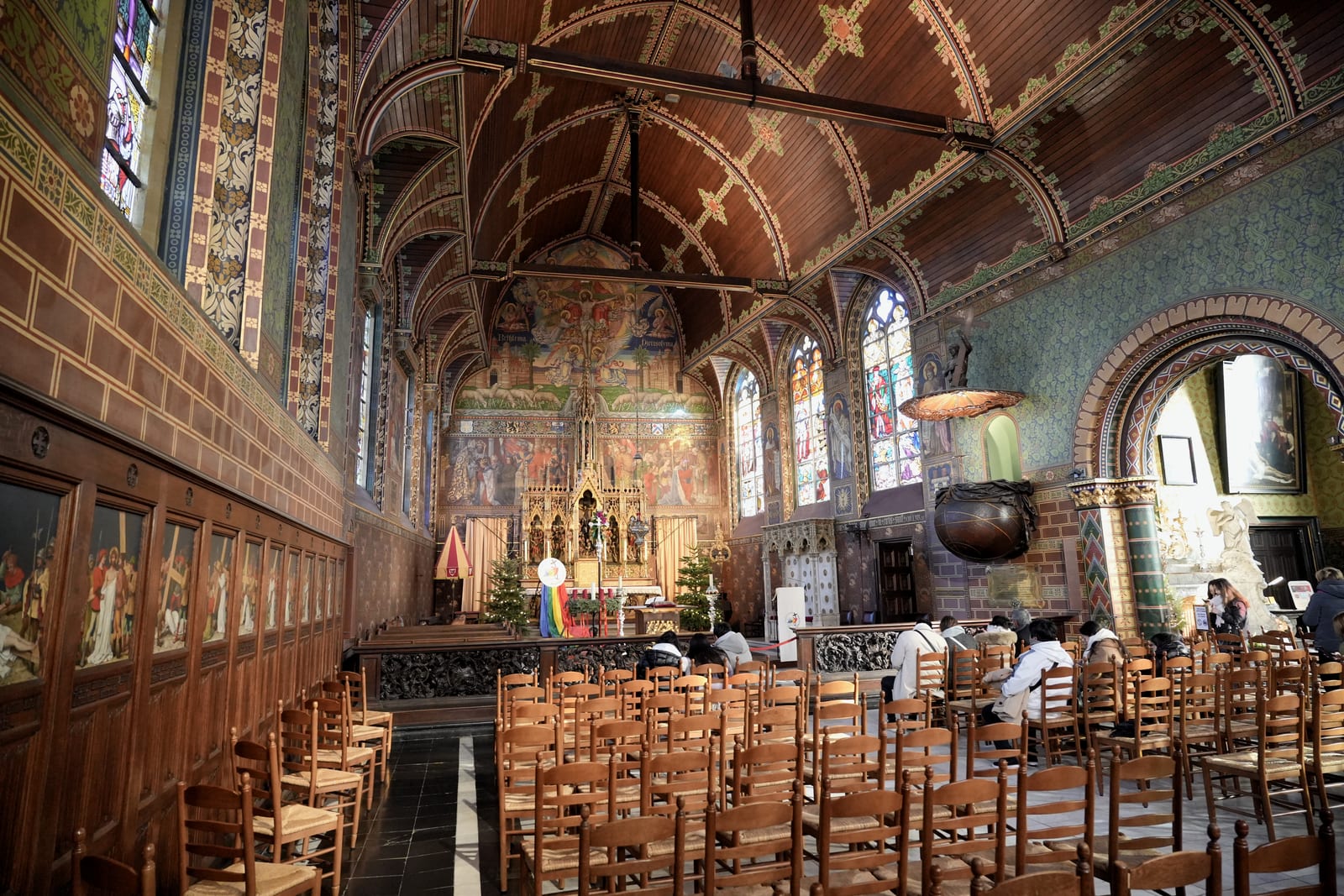
Basilica of the Holy Blood
Two very different chapels stand one above the other on the Burg: a Romanesque room of dark stone below and a colourfully decorated chapel housing the venerated Holy Blood relic above.
St Saviour’s Cathedral
Bruges’ cathedral combines a Gothic interior with a massive tower. Inside are choir stalls, tapestries and artworks from churches that have disappeared from the city.
Jerusalem Chapel
The Adornes merchant family’s private chapel links Bruges with Jerusalem. Behind its unusual tower are stained-glass windows, a family tomb and a replica of the Holy Sepulchre.
St Anne’s Church
Behind the plain brick façade of Sint-Annakerk lies a richly furnished Baroque interior. Marble, carved oak and a monumental Last Judgement fill the single-nave church.
St James’s Church
Sint-Jakobskerk stands in a district once home to wealthy merchants and courtiers. Its artworks and tombs tell the story of these patrons. A shell beside the door marks the pilgrimage route to Santiago.
St Walburga’s Church
The former Jesuit church on Sint-Maartensplein is one of Bruges’ major Baroque buildings. Beyond its ornate façade are marble altars, a carved pulpit and painted decoration.
Which church should you visit?
A Madonna, tombs or a relic
The Church of Our Lady houses Michelangelo’s Madonna and Child and the tombs of Mary of Burgundy and Charles the Bold. To see them, enter the museum section. Part of the church remains free to enter. A visit fits particularly well into an afternoon exploring the museums beside the Dijver.
The Basilica of the Holy Blood on the Burg has a different focus. Beneath the colourfully decorated upper chapel lies the plain Romanesque Chapel of St Basil. The venerated relic links the building with the annual Ascension Day procession. The basilica is free to enter; its treasury is a separate museum visit. Worship takes priority during services.
The cathedral and the story of vanished churches
St Saviour’s Cathedral on Steenstraat brings together Gothic architecture, choir stalls, tapestries and a treasury. Some of its art came from dissolved monasteries and demolished churches, including the former St Donatian’s Cathedral on the Burg. The present skyline therefore tells only part of Bruges’ church history: some buildings disappeared while their furnishings survived elsewhere.
This history also leads to the Beguinage. Its church and white houses belong to a religious community whose way of life differed from that of a conventional convent. Together, they show how closely housing, care and faith were connected in Bruges.
Two contrasting interiors in the Sint-Anna district
The Jerusalem Chapel is the private chapel of the Adornes merchant family, modelled on the Church of the Holy Sepulchre in Jerusalem. Its tomb, stained glass and small, unusually arranged interior make it a personal counterpart to the great city churches. It belongs to the Adornes estate, where admission is charged.
Nearby St Anne’s Church looks plain from outside but has a richly furnished Baroque interior. Oak, marble and the large Last Judgement dominate the space. Both buildings can be combined with the lace centre without retracing your steps between the Markt and the museum district.
Donors’ art and Baroque churches beyond the main squares
St James’s Church stands north-west of the Markt. Its tombs and paintings tell the story of merchants, court officials and wealthy neighbours. A scallop shell beside the entrance marks the medieval pilgrimage route to Santiago de Compostela. The church is particularly revealing for its funerary art and the role of private donors.
St Walburga’s Church, by contrast, was built as an imposing Jesuit church. Its pronounced Baroque style reflects an order that intended architecture and furnishings to work together. It is closed for renovation, expected to last until the end of March 2027. For an accessible Baroque interior in the same part of town, St Anne’s Church is the natural alternative.